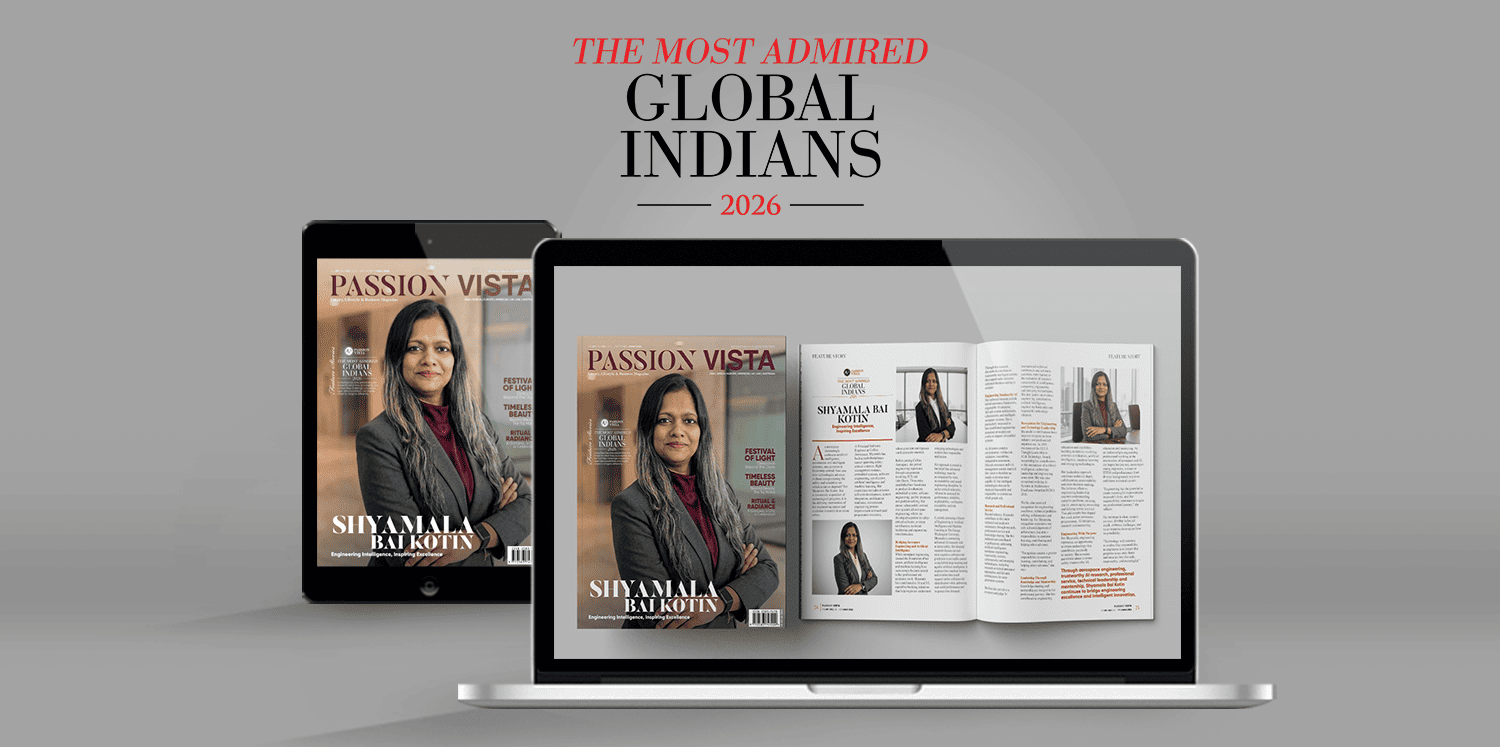

As aerospace increasingly embraces artificial intelligence, automation and intelligent systems, one question is becoming central: how can new technologies advance without compromising the safety and reliability on which aviation depends? For Shyamala Bai Kotin, this is not merely a question of technological progress; it is the defining intersection of her engineering career and academic research in aviation safety.
A Principal Software Engineer at Collins Aerospace, Shyamala has built a multidisciplinary career spanning safety-critical avionics, flight management systems, embedded systems, software engineering, certification, artificial intelligence and machine learning. Her experience includes avionics software development, system integration, certification readiness, sustainment, engineering process improvement and technical programme execution, where precision and rigorous verification are essential.
Before joining Collins Aerospace, she gained engineering experience through assignments involving TCS and John Deere. These roles established her foundation in product development, embedded systems, software engineering, quality processes and problem-solving. Her career subsequently evolved into specialised aerospace engineering, where she developed expertise in safety-critical software, avionics certification, technical leadership and engineering transformation.
Bridging Aerospace Engineering and Artificial Intelligence
While aerospace engineering formed the foundation of her career, artificial intelligence and machine learning have increasingly become central to her professional and academic work. Shyamala has contributed to AI and ML capability-building initiatives that help engineers understand emerging technologies and explore their responsible application.
Her approach is rooted in the belief that advanced technology must be accompanied by trust, accountability and sound engineering discipline. In safety-critical industries, AI must be assessed for performance, reliability, explainability, verification, traceability and risk management.
Currently pursuing a Doctor of Engineering in Artificial Intelligence and Machine Learning at The George Washington University, Shyamala is connecting advanced AI research with aviation safety. Her doctoral research focuses on real-time cognitive collision-risk prediction in air traffic control using hybrid deep learning and agentic artificial intelligence. It explores how machine learning and aviation data could support earlier collision-risk identification while addressing real-world performance and response-time demands.
Through this research, she seeks to contribute to trustworthy intelligent systems that support safer and more informed decision-making in aviation.
Engineering Trustworthy AI
Her technical interests include hybrid assurance frameworks, responsible AI adoption, fail-safe system architectures, cybersecurity and intelligent aerospace systems. She is particularly interested in how established engineering-assurance principles can evolve to support AI-enabled systems.
As AI enters complex environments, verification, validation, traceability, independent assessment, lifecycle assurance and risk management remain essential. Her vision is therefore not simply to develop more capable AI, but intelligent technologies that can be deployed dependably and responsibly in systems on which people rely.
Research and Professional Service
Beyond industry, Shyamala contributes to the wider technical and academic community through research, professional service and knowledge-sharing. She has authored and contributed to publications addressing artificial intelligence, aerospace engineering, trustworthy systems, cybersecurity and emerging technologies, including research on hybrid assurance approaches and fail-safe architectures for next-generation systems.
She has also served as a reviewer and judge for international technical conferences and scholarly activities, contributing to the evaluation of research across artificial intelligence, computing, engineering and emerging technologies. She also speaks on avionics engineering, certification, artificial intelligence, engineering leadership and responsible technology adoption.
Recognition for Engineering and Technology Leadership
Shyamala’s contributions have received recognition from industry and professional organisations. In 2026, she received the GLLA Thought Leadership in AI & Technology Award, recognising her contributions at the intersection of artificial intelligence, technology leadership and engineering innovation. She was also recognised with the AI Systems & Architecture Excellence Award at INDEA 2026.
She has also received recognition for engineering excellence, technical problem-solving, collaboration and leadership. For Shyamala, recognition represents not only acknowledgement of achievement, but also a responsibility to continue learning, contributing and helping others advance.
“Recognition creates a greater responsibility to continue learning, contributing, and helping others advance,” she says.
Leadership Through Knowledge and Mentorship
Knowledge-sharing and mentorship are integral to her professional journey. She has contributed to engineering education and capability-building initiatives involving avionics certification, artificial intelligence, machine learning and emerging technologies.
Her leadership approach combines technical depth, collaboration, accountability and clear decision-making. She believes effective engineering leadership requires understanding complex problems, creating clarity, encouraging ownership and helping teams succeed. This philosophy has shaped her work across aerospace programmes, AI initiatives, research and mentoring.
Engineering With Purpose
For Shyamala, engineering represents an opportunity to create technology that contributes positively to society. She remains passionate about aviation safety, trustworthy AI, education and mentoring. As an Indian-origin engineering professional working at the intersection of aerospace and AI, she hopes her journey encourages young engineers, women in STEM and professionals from diverse backgrounds to pursue ambitious technical careers.
“Engineering has the potential to create meaningful improvements in people’s lives, and that responsibility continues to inspire my professional journey,” she reflects.
Her message is clear: remain curious, develop technical depth, embrace challenges, and never separate innovation from responsibility.
“Technology will continue to evolve. Our responsibility as engineers is to ensure that progress is not only faster and smarter, but also safe, trustworthy, and meaningful.”
Through aerospace engineering, trustworthy AI research, professional service, technical leadership and mentorship, Shyamala Bai Kotin continues to bridge engineering excellence and intelligent innovation.
Author: Nikeeta Borkakoti