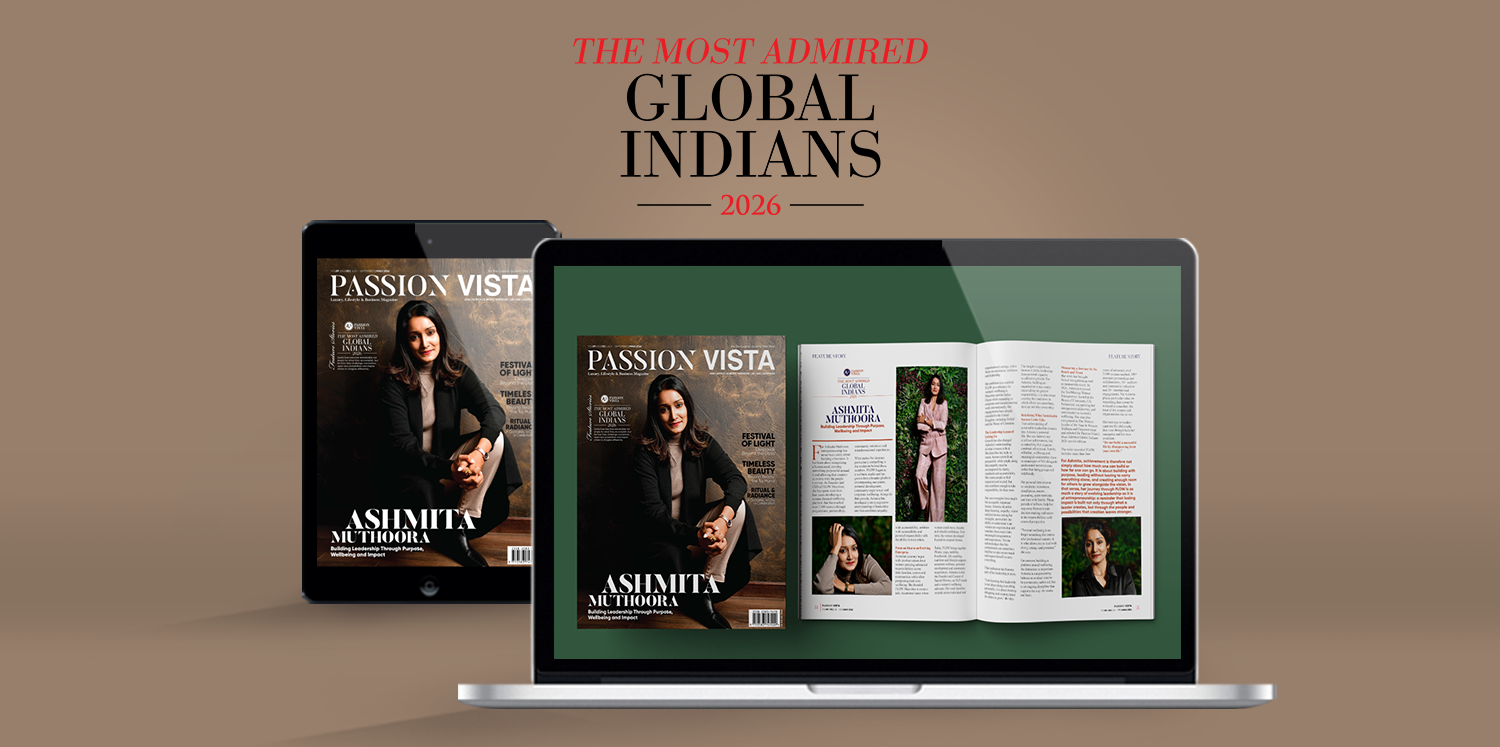

For Ashmita Muthoora, entrepreneurship has never been solely about building a business. It has been about recognising a human need, creating something purposeful around it and allowing that creation to evolve with the people it serves. As Founder and CEO of FLOW Mauritius, she has spent more than four years developing a women-focused wellbeing platform that has reached over 2,000 women through programmes, partnerships, community initiatives and transformational experiences.
What makes her journey particularly compelling is the evolution behind those numbers. FLOW began as a wellness studio and has grown into a broader platform encompassing movement, personal development, community experiences and corporate wellbeing. Alongside that growth, Ashmita has developed a more expansive understanding of leadership: one that combines empathy with accountability, ambition with sustainability and personal responsibility with the ability to trust others.
From an Idea to an Evolving Enterprise
Ashmita’s journey began with an observation about women carrying substantial responsibilities across their families, careers and communities while often postponing their own wellbeing. She founded FLOW Mauritius to create a safe, intentional space where women could move, breathe and rebuild confidence. Over time, the venture developed beyond its original format.
Today, FLOW brings together Pilates, yoga, mobility, breathwork, life coaching, nutrition and lifestyle support, corporate wellness, personal development and community experiences. Ashmita is also the Founder and Curator of Sacred Mirrors, an NLP coach and a women’s wellbeing advocate. Her work therefore extends across individual and organisational settings, with a focus on confidence, resilience and leadership.
Her ambition is to establish FLOW as a reference for women’s wellbeing in Mauritius and the Indian Ocean while expanding its corporate and transformational work internationally. Her engagements have already extended to the United Kingdom, including Oxford and the House of Commons.
The Leadership Lesson of Letting Go
Growth has also changed Ashmita’s understanding of what it means to lead. She describes her style as warm, human-centred and purposeful, while emphasising that empathy must be accompanied by clarity, standards and accountability. She wants people to feel respected and trusted, but also confident enough to take responsibility for their work.
Her own strengths have taught her an equally important lesson. Ashmita identifies deep listening, empathy, vision and persistence among her strengths, particularly her ability to understand what women are experiencing and translate those needs into meaningful programmes and experiences. Yet she acknowledges that this commitment can sometimes lead her to take on too much and expect herself to carry everything.
That realisation has become part of her leadership journey.
“I am learning that leadership is not about doing everything personally; it is about trusting, delegating and creating space for others to grow,” she says.
The insight is significant because it shifts leadership from personal capacity to collective growth. For Ashmita, building an organisation is not simply about taking on greater responsibility; it is also about creating the conditions in which others can contribute, develop and take ownership.
Redefining What Sustainable Success Looks Like
That understanding of sustainable leadership extends into Ashmita’s personal life. She sees balance not as a fixed achievement, but as something that requires continual adjustment. Family, reflection, wellbeing and meaningful relationships have to remain part of life alongside professional commitments rather than being postponed indefinitely.
Her personal time returns to simplicity: movement, mindfulness, nature, journaling, quiet moments and time with family. These periods of stillness help her step away from constant decision-making and return to her responsibilities with renewed perspective.
“Personal wellbeing is no longer something that comes after professional success; it is what allows me to lead with clarity, energy and presence,” she says.
For someone building a platform around wellbeing, the distinction is important. Ashmita is not presenting balance as an ideal state to be permanently achieved, but as an ongoing discipline that supports the way she works and leads.
Measuring a Journey by Its Reach and Trust
Her work has brought formal recognition as well as measurable reach. In 2026, Ashmita received the Trailblazing Women Entrepreneur Award at the House of Commons, UK Parliament, recognising her entrepreneurial journey and contribution to women’s wellbeing. She was also recognised as The Women Leader of the Year in Women Wellness and Empowerment and selected for Passion Vista’s Most Admired
Global Indians 2026 special edition.
The wider record of FLOW includes more than four years of advocacy, over 2,000 women reached, 100+ strategic partnerships and collaborations, 50+ wellness and community initiatives and 10+ international engagements. Yet Ashmita places particular value on something that cannot be reduced to a number: the trust of the women and organisations she serves.
Her message to readers captures the philosophy that runs through both her enterprise and her own evolution:
“Do not build a successful life by disappearing from your own life.”
For Ashmita, achievement is therefore not simply about how much one can build or how far one can go. It is about building with purpose, leading without having to carry everything alone, and creating enough room for others to grow alongside the vision. In that sense, her journey through FLOW is as much a story of evolving leadership as it is of entrepreneurship: a reminder that lasting impact is built not only through what a leader creates, but through the people and possibilities that creation leaves stronger.