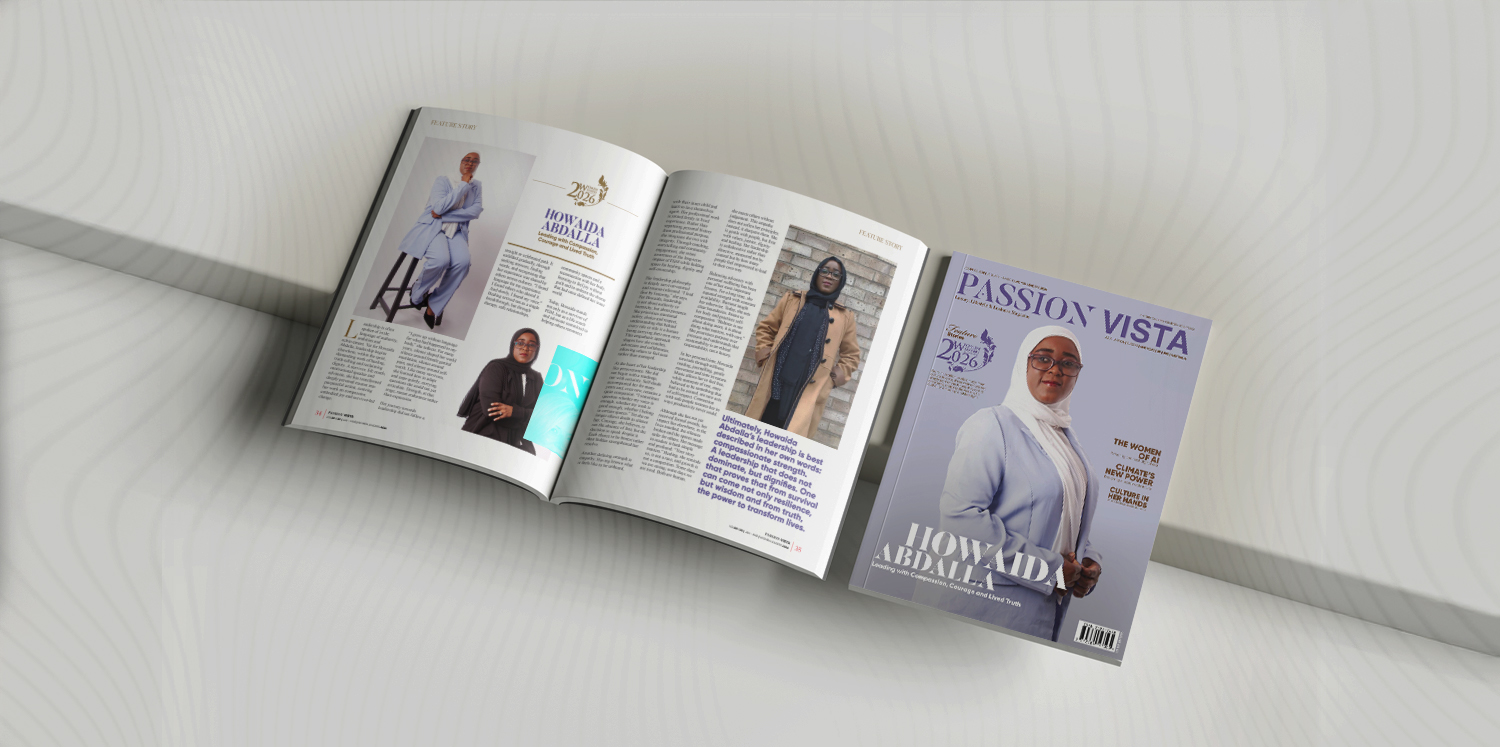

Leadership is often spoken of in the language of authority, ambition and achievement. Yet for Howaida Abdalla, leadership begins elsewhere, within the quiet, demanding work of healing, truth-telling and reclaiming dignity. A survivor, life coach, motivational speaker and advocate, she has transformed deeply personal trauma into purposeful action, centring her work on compassion, embodied joy and survivor-led change.
“I grew up without language for what had happened to my body,” she reflects. For many years, silence shaped her world silence around female genital mutilation, silence around pain, and silence around self-worth. Like many survivors, she learned how to adapt and cope quietly, carrying questions she could not yet articulate. Strength, at that stage, meant endurance rather than expression.
Her journey towards leadership did not follow a straight or celebrated path. It unfolded gradually, through seeking answers, finding words, and recognising that her experience was shared by others across cultures. “I found language for my experience. I found others who shared it. And slowly, I found my voice.” Healing arrived not as a single breakthrough, but through therapy, safe relationships, community spaces and a reconnection with her body, learning to feel joy without guilt and to unlearn the shame that had once defined her inner world.
Today, Howaida stands not only as a survivor of FGM, but as a life coach and advocate committed to helping others reconnect with their inner child and learn to love themselves again. Her professional work is rooted firmly in lived experience. Rather than separating personal history from professional purpose, she integrates the two with integrity. Through coaching, storytelling and community engagement, she raises awareness of the long-term impact of FGM while holding space for healing, dignity and self-ownership.
Her leadership philosophy is deeply survivor-centred and trauma-informed. “I lead first by listening,” she says. For Howaida, leadership is not about authority or hierarchy, but about presence. She prioritises emotional safety, choice and respect, understanding that behind every role or title is a human being carrying their own story. This empathetic approach shapes how she coaches, advocates and collaborates, allowing others to feel seen rather than managed.
At the heart of her leadership lies perseverance. She did not begin with a roadmap, nor with certainty. Self-doubt accompanied her for many years and, even now, remains a quiet companion. “I sometimes question whether my voice is enough, whether my work is good enough, whether I belong in certain spaces.” Yet she no longer allows doubt to silence her. Courage, she believes, is not the absence of fear, but the decision to speak despite it. Each choice to be honest rather than hidden strengthened her resolve.
Another defining strength is empathy. Having known what it feels like to be unheard, she meets others without judgement. This empathy does not soften her principles; instead, it sharpens them. She is gentle with people, but firm with values, justice, dignity and healing. Her leadership is collaborative rather than directive, measured not by control but by how many people feel empowered to lead in their own way.
Balancing advocacy with personal wellbeing has been one of her most important lessons. For a long time, she equated strength with constant availability. Burnout taught her otherwise. Today, she sets clear boundaries, listens to her body and practices self-compassion. “Balance is not about doing more, it is about doing what matters, with care.” She prioritises purpose over pressure and understands that sustainability is an ethical responsibility, not a luxury.
In her personal time, Howaida unwinds through stillness, reading, journalling, gentle movement and time in nature. Music allows her to feel free, while moments of rest, once believed to be something that had to be earned, are now acts of self-respect. Connection with safe people restores her in ways productivity never could.
Although she has not yet received formal awards, her impact lies elsewhere, in the lives touched, the silences broken and the spaces made safer for others. Her message to readers is both simple and profound: “Your story matters.” Healing, she reminds us, is not a race, and growth is not a competition. Some days we are strong; some days we are tired. Both are human.
Ultimately, Howaida Abdalla’s leadership is best described in her own words: compassionate strength. A leadership that does not dominate, but dignifies. One that proves that from survival can come not only resilience, but wisdom and from truth, the power to transform lives.