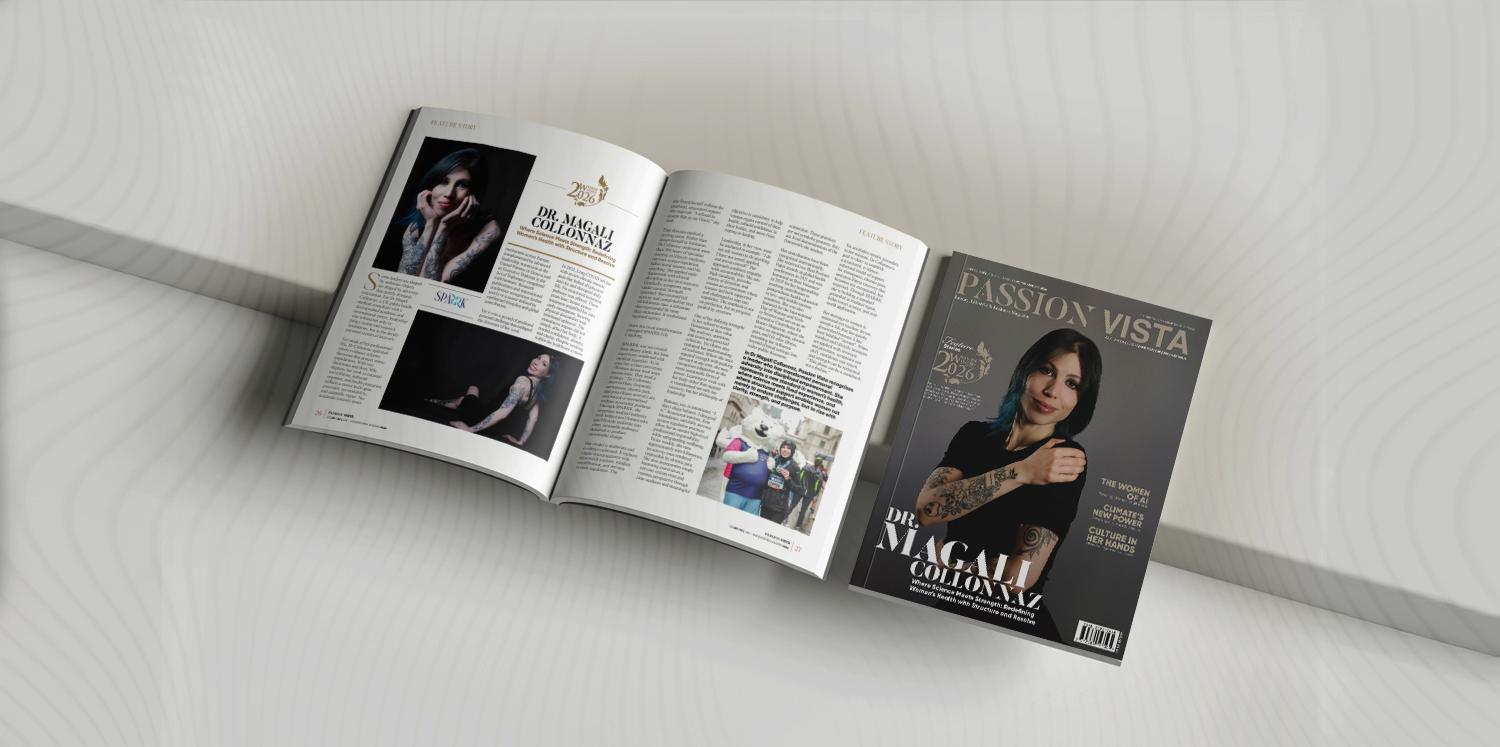

Where Science Meets Strength: Redefining Women’s Health with Structure and Resolve
Some leaders are shaped by ambition. Others are shaped by adversity that quietly demands reinvention. For Dr Magali Collonnaz, a UK public health medical consultant with a distinguished academic and international career, leadership was refined not only in policy rooms and research institutions, but in the deeply personal terrain of recovery.
For much of her professional life, Dr Collonnaz operated where evidence informs decisions that protect entire populations. With two doctorates and three MSc degrees, her work in national surveillance, outbreak response, and health protection reflects a career built upon precision, accountability, and scientific rigour. Her academic journey spans institutions across Europe, complemented by advanced leadership immersion at the United Nations in Geneva and an Executive Diploma in the Art of Diplomacy completed with honours. Research publications and international conference recognition further testify to a career defined by intellectual discipline and global contribution.
Yet it was a period of profound personal challenge that reshaped the direction of her work.
In 2022, Long COVID left her with severe chronic muscle pain that halted all physical activity and disrupted daily life. No structured treatment pathway was offered. Three years later, breast cancer treatment propelled her into early menopause, layering physical discomfort with emotional upheaval. The cumulative impact did not simply affect her body; it eroded confidence, identity, and clarity. Despite working within the healthcare system, she found herself without the practical, structured support she required. “I refused to accept that as my future,” she said.
That decision marked a turning point. Rather than resign herself to limitation, Dr Collonnaz undertook more than 500 hours of specialist training in lifestyle medicine, nervous system regulation, behavioural science, and life coaching. She applied each framework with clinical discipline to her own recovery. Gradually, symptoms came under control. Strength returned. She resumed full activity and completed her first 10-kilometre race, a milestone that represented far more than endurance. It symbolised regained agency.
From this lived transformation emerged SPARRK Life Coaching.
SPARRK was not created from theory alone, but from experience combined with medical expertise. At its core lies a clear conviction: “Women do not need more reassurance. They need a strategy.” Dr Collonnaz observed how frequently menopause, chronic pain, and post-illness recovery are minimised or normalised without structured guidance. Through SPARRK, she integrates medical authority with behavioural frameworks and lifestyle medicine into clear, actionable pathways designed to produce measurable change.
Her model is deliberate and evidence-informed. It replaces vague encouragement with structured routines, mindset recalibration, and nervous system regulation. The objective is consistent: to help women regain control of their health, rebuild confidence in their bodies, and move from coping to leading.
Leadership, in her view, must be anchored in example. “I do not ask women to do anything I have not tested, applied, and proven myself.” Her approach combines empathy with accountability. She sets high standards, provides clarity of direction, and creates an environment where women feel both supported and challenged to step into capability. The emphasis is not on perfection, but on progress guided by structure.
One of her defining strengths is her refusal to accept limitations at face value. She analyses, questions, and constructs practical solutions. Yet illness also reshaped her understanding of resilience. Where she once equated strength with pushing forward at any cost, she now recognises adaptation as the more sustainable form of power. Learning to work with her body rather than against it transformed not only her recovery, but her philosophy of leadership.
Balance, too, is intentional. “I don’t chase balance. I designed it.” Structured routines, firm boundaries, and daily nervous system regulation practices allow her to sustain high-level professional responsibility while safeguarding wellbeing. Twice weekly, she runs approximately nine kilometres, an activity once rendered impossible by chronic pain. She also incorporates simple humming exercises as a nervous system reset and restores perspective through time outdoors and meaningful connection. These practices are not symbolic gestures; they are lived demonstrations of the framework she teaches.
Her contributions have been recognised internationally. She received two Best Position Paper awards at global health conferences in 2021 and was honoured as Best Volunteer in 2025 for her longstanding teaching contribution to postgraduate health education in low- and middle-income countries. She was also featured for the International Day of Women and Girls in Science and serves as an Executive Contributor for Brainz Magazine, where she writes on menopause, chronic pain, and life after illness, extending her influence beyond clinical settings into wider public discourse.
Yet accolades remain secondary to her mission. Dr Collonnaz’s goal is clear: to establish a structured, evidence-informed model of support for menopause, chronic pain, and post-illness recovery that becomes not exceptional, but expected. Through SPARRK, she is building a standard grounded in medical rigour, behavioural science, and real-world application.
Her message to women is measured yet resolute: do not accept a life that has quietly diminished because it has been labelled “normal”. When mindset and lifestyle strategies are applied with structure and precision, symptoms can shift, confidence can return, and strength can be reclaimed. “This phase can be a comeback, not a decline.”
In Dr Magali Collonnaz, Passion Vista recognises a leader who has transformed personal adversity into disciplined empowerment. She represents a new standard in women’s health, where science meets lived experience, and where structured support enables women not merely to endure challenges, but to rise with clarity, strength, and purpose.