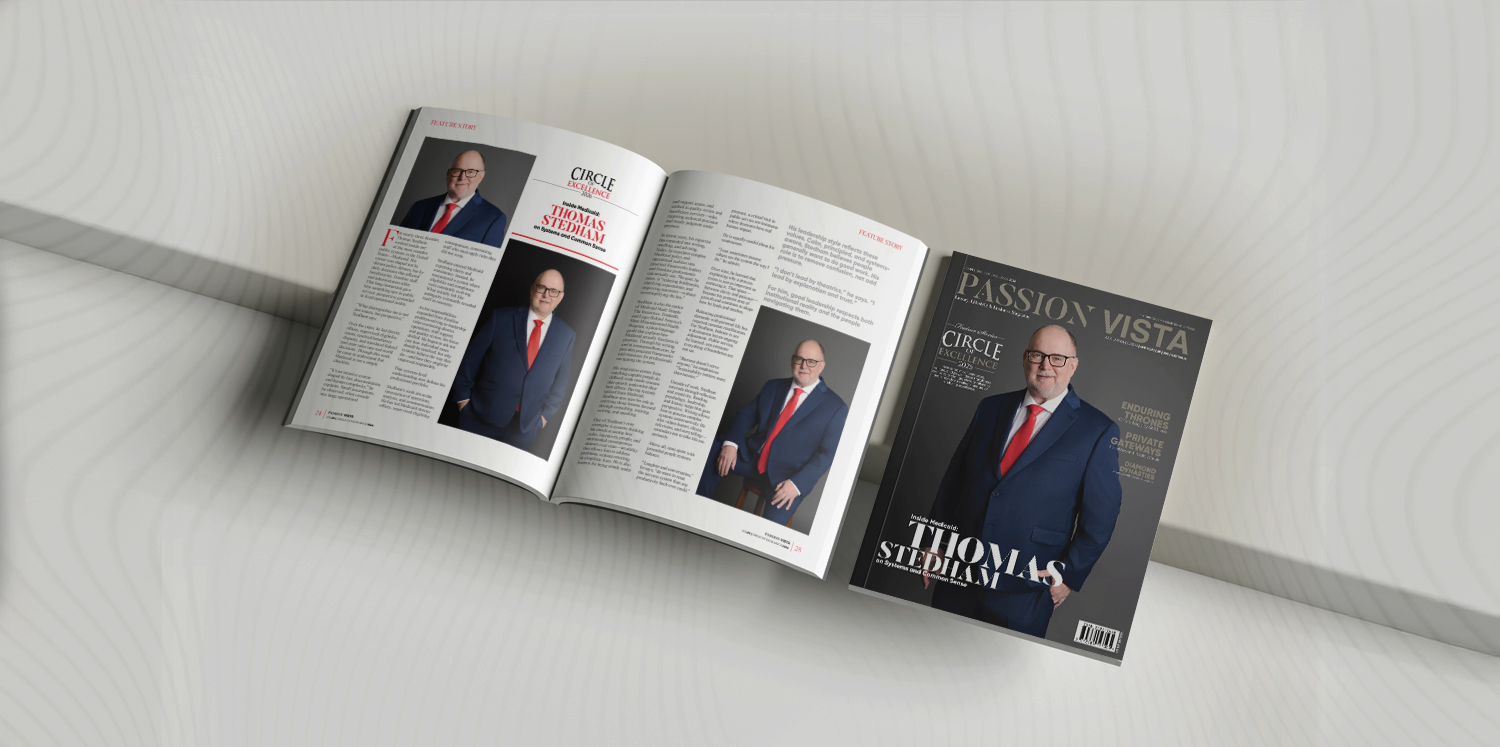

For nearly three decades, Thomas Stedham worked inside one of the most complex public systems in the United States—Medicaid. His career was shaped not by distant policy debates, but by daily decisions that affected beneficiaries, frontline staff, and administrators alike. That long immersion gave him something rare in public service: perspective grounded in lived operational reality.
“What distinguishes me is not just tenure, but perspective,” Stedham says.
Over the years, he led district offices, supervised eligibility teams, resolved beneficiary disputes, and translated federal and state rules into real-world decisions. Through this work, he came to understand that Medicaid is not a simple checklist.
“It’s an iterative system shaped by law, documentation, and human complexity,” he explains. Small assumptions, he observed, often cascade into large operational consequences, constraining staff who must apply rules they did not write.
Stedham entered Medicaid expecting clarity and consistency. Instead, he encountered a system where eligibility and compliance were constantly evolving. What initially felt like ambiguity eventually revealed itself as necessity.
As his responsibilities expanded from frontline problem-solving to leadership roles overseeing district operations, staff support, and quality review, his focus shifted. He began to ask not just how individual cases should be resolved, but why systems behave the way they do—and how they might be improved responsibly.
That systems-level understanding now defines his professional portfolio.
Stedham’s work sits at the intersection of operations, analysis, and communication. He has led Medicaid district offices, supervised eligibility and support teams, and worked in quality review and beneficiary services—roles requiring technical precision and steady judgment under pressure.
In recent years, his expertise has expanded into writing, teaching, and advising. Today, he translates complex Medicaid policy and operational realities into practical frameworks leaders and frontline professionals can actually use. The goal, he notes, is “reducing bottlenecks, clarifying expectations, and improving outcomes—without oversimplifying the law.”
Stedham is also the author of Medicaid Made Simple: The Incentives, Tradeoffs, and Logic Behind America’s Most Misunderstood Health Program, a plain-language guide that explains how Medicaid actually functions in practice. Through his writing and at tommystedham.com, he provides practical frameworks and resources for professionals navigating the system.
His inspiration comes from watching capable people do difficult work inside systems that quietly undermine their best efforts. Having recently retired from Medicaid, Stedham now sees his role as carrying those lessons forward through consulting, training, writing, and speaking.
One of Stedham’s core strengths is systems thinking. He excels at seeing how rules, incentives, people, and unintended consequences interact over time—an ability that allows him to address problems without resorting to simplistic fixes. He is also known for being steady under pressure, a critical trait in public service environments where decisions have real human impact.
He is equally candid about his weaknesses.
“I can sometimes assume others see the system the way I do,” he admits.
Over time, he learned that explaining why a process exists is just as important as enforcing it. That space—between clarity and patience—became his greatest area of growth and continues to shape how he leads and teaches.
Balancing professional demands with personal life has required constant recalibration. For Stedham, balance is not a destination but an ongoing adjustment. Public service, he learned, can consume everything if boundaries are not set.
“Burnout doesn’t serve anyone,” he emphasizes. “Sustainability matters more than heroics.”
Outside of work, Stedham unwinds through reflection and creativity. Reading psychology, leadership, and history helps him gain perspective. Writing allows him to process complex systems constructively. He also values humor, classic television, and storytelling—reminders not to take life too seriously.
Above all, time spent with grounded people restores balance.
“Laughter and conversation,” he says, “do more to reset the nervous system than any productivity hack ever could.”
His leadership style reflects these values. Calm, principled, and systems-aware, Stedham believes people generally want to do good work. His role is to remove confusion, not add pressure.
“I don’t lead by theatrics,” he says. “I lead by explanation and trust.”
For him, good leadership respects both institutional reality and the people navigating them.